精神健康周:采访游戏专家
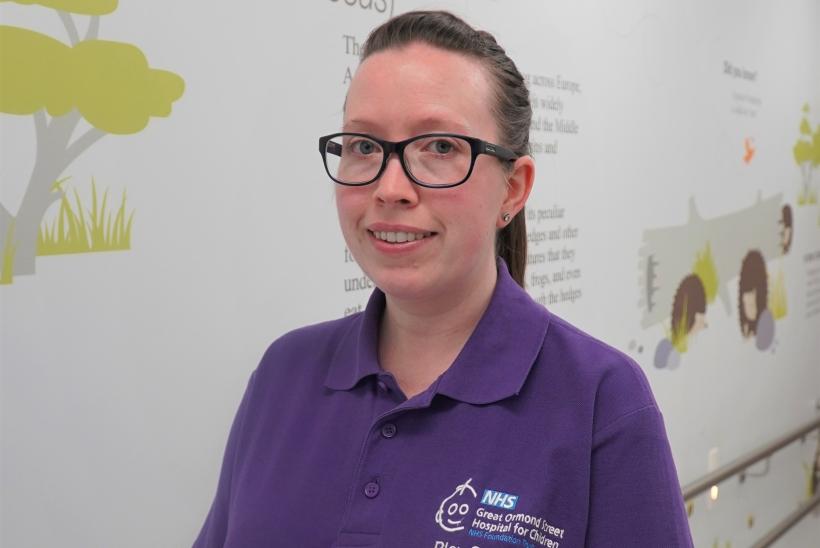
金伯利·米勒是大奥蒙德街儿童医院(GOSH)一位专业的健康游戏专家,拥有多年丰富的游戏专员经验,她于近期完成了相关课程并正式地成为了一名游戏专家。金伯利对孩子们热情满满,为他们带来了欢声笑语,她像一束光照进了我们可爱患儿们的心底。
金伯利十分注重患儿们的心理和精神健康,她为孩子们创建了一个安全的空间,让他们放松游戏,尽情地表达。在新冠病毒流行期间,她在Instagram (照片墙)上创建了名为@Playinhospital的社交媒体账号,在该平台里为父母们提供游戏活动的创意,并与医院的患者们一起推广游戏团队的宝贵工作,强调了游戏团队在患儿治疗过程中产生的重要影响。
Why did you want to be a Play Specialist at GOSH? What's your favourite part of your job?
I started working as a Play Worker at GOSH in 2015, and I felt very lucky when I got accepted into the Play Specialist course in September 2021. Whilst studying, I continued to work as a Play Worker. Now that I'm nearing the end of my course, I'm grateful for the new opportunities being a Play Specialist will bring me at GOSH. My favourite thing about my job is making children and young people happy and seeing them smile. One of my favourite activities is creating artwork using footprints.
What does a typical day at GOSH look like for you?
I gather information from the wards I cover as a Play Specialist, which are Hedgehog and Bumblebee Ward. Then, I plan and organize my day based on what the patients need. I help prepare and distract patients before they have medical procedures, and I provide different play activities to keep children occupied while they're waiting for surgery or during their hospital stay.
Can you explain the role of a play specialist in a hospital and how it supports the mental health of sick children?
As a Play Specialist, I create a safe place for sick children to talk, play, and take a break from medical things. Hospitals can be scary for kids, and some may have gone through difficult experiences. It's our job to let them express their feelings and provide activities to support them. We also speak up for children and make sure they have a positive experience in the hospital.
How play can help improve the mental well-being of children in the hospital?
Play can distract children and get their attention by incorporating their likes and interests. For example, if a child loves baby dolls, we can use dolls and medical toys to role-play and prepare them for medical procedures. This creates a positive play experience for the child, allowing them to learn and develop while having fun.
How do you customise play activities to meet the specific needs of each child, considering their medical condition and emotions?
Most activities can be adapted to meet the needs and abilities of patients. Understanding the child's age, development, and comprehension helps us plan activities. We also adjust the language we use to make sure the child understands. It's important to use language that suits each child.
Can you share any success stories where play significantly improved the mental health of a sick child during their hospital stay?
Recently, I worked with a patient who had experienced trauma at another hospital. They were terrified and didn't speak or understand English. Luckily, the patient's parents could translate from Greek to English. I brought in role-play resources like a playhouse, play food, and dolls. By using these resources to build trust, the child became comfortable. When it was time for medical observations, I used medical toys to role-play with the dolls. The child engaged well and, after practicing on the doll, had their own observations without any tears or worries. It was a positive step forward after experiencing trauma.
What challenges do you face as a play specialist in promoting the power of play for mental health in a hospital environment?
The team of play specialists are on hand to explain to the children in a child friendly manner any medical procedures they may be going through as they may misunderstand or not fully understand the medical language. If a play plan is in place for a child, we do our best to follow this through by working with the medical team to ensure the best chance of success.
Do you have any tips or play techniques that parents can use to support the mental health of their ill child?
Parents can support their ill child's mental health by listening to them, talking, and responding to their needs. They can find out about their child's thoughts and feelings through play or conversation. Some children express themselves through drawing or role-playing, which can help parents understand their emotions.
Looking ahead, what are your hopes for the future of play therapy in hospitals and its impact on the mental health of sick children?
We are extending our play service at present to include some weekend and evening cover.

